Durdle Door: a day trip from Bournemouth
Plan a Durdle Door day trip from Bournemouth: driving and parking, the train to Wool and Jurassic Breezer bus, the walk to Lulworth Cove and staying safe.

On this page
Durdle Door is the arch in every photograph of the Dorset coast, and it is an easy day trip from Bournemouth. The limestone arch stands off a shingle beach on the Lulworth Estate, around an hour's drive west, and a train to Wool plus a seasonal bus gets you there without a car.
This guide covers the journey, the steep walk down, Lulworth Cove next door and how to stay safe on a beach that catches people out. For more of what the coast offers, our round-up of every beach near Bournemouth and the Bournemouth Guide's itineraries are useful companions.
What is Durdle Door?
Durdle Door is a natural arch of Portland limestone, formed when the sea broke through a band of hard rock, which the Lulworth Estate dates to around 10,000 years ago. It is part of the Jurassic Coast, the Dorset and East Devon World Heritage Site, and the estate that owns the land manages the car park, paths and beaches.
The arch sits at the end of a curved shingle beach, with a second beach, Man O'War, on the other side of the headland. Both are reached by steps from the clifftop path. Along the shore you can see the rock layers tilted almost upright, which is why geology groups come here as often as holidaymakers do.
The estate's page includes an interpretation panel on how the arch formed, and it gives a clear warning: keep out of the wave-cut caves, where cliff falls are common.
How do you get from Bournemouth to Durdle Door?
Drive west for around an hour, or take the train to Wool and the seasonal Jurassic Breezer 31 bus. The estate's getting-here page lists Wool and Wareham as the nearest stations, both on the South Western Railway line from Bournemouth to Weymouth, and names Wool as the main hub for the summer buses.
By train and bus
Trains from Bournemouth reach Wool in a little over half an hour. From the station, the Jurassic Breezer 31, run by morebus, is an open-top service to Durdle Door and Lulworth Cove. In 2026 it ran on Saturdays, Sundays and holidays from 14 March and daily from 18 May through the summer season. Out of season, check for any winter service first; otherwise a taxi from Wool is the realistic option.
The related Jurassic Breezer 30 runs a longer route from Swanage via Corfe Castle and Wool to Lulworth and Weymouth in season, which lets you link Durdle Door with a visit to Corfe Castle without driving.
By car
Follow the A35 towards Wareham and Dorchester, then the A352 and the signs for Lulworth. The estate publishes separate postcodes for Durdle Door (BH20 5PU) and Lulworth Cove (BH20 5RQ), which is worth knowing because they are different car parks. Durdle Door's is on the clifftop next to the holiday park. Charges are set by the estate and change by season, so check its site.
On a hot summer weekend both car parks can fill by late morning. Arrive early, or come later in the afternoon when the first wave leaves. If you are driving from one of our apartments, the Help Centre's parking guide covers your building.
What is the walk down to Durdle Door like?
From the clifftop car park, a wide chalky path runs steeply downhill to the top of the steps above the beach; allow 15 to 20 minutes down and more coming back up. There is no level route. Wear shoes with grip, since the path is loose and dusty in summer and slippery after rain.
At the bottom, steps lead down to the main beach facing the arch, and a separate flight goes down to Man O'War beach on the eastern side. The estate says beach access closes at 9pm or dusk.
The beach is shingle and shelves steeply, so the water gets deep only a few steps out. Many people swim here in summer, but we could not confirm regular lifeguard cover. Read the RNLI's general beach safety advice before you go, keep children close and stay out of the caves.
How far is Lulworth Cove from Durdle Door?
About a mile along the South West Coast Path, over the headland of Hambury Tout; allow around half an hour each way at an easy pace. The path climbs steeply out of each end, so it is a proper walk rather than a stroll, and the views back to the arch from the top are the best of the day.
Lulworth Cove is an almost circular bay, carved where the sea broke through the hard outer rocks and scooped out the softer clay behind them. The village has a heritage centre, cafés and a pub. Just west of the cove is Stair Hole, a smaller inlet where you can see the folded rock layers at close quarters.
A good plan is to park at one end, walk to the other, have lunch and walk back. That gives you the arch, the cove and a couple of hours on the coast path.
East of the cove are the Lulworth army ranges, where the paths open to the public only at certain times, usually weekends and school holidays. Check the range walks' opening times before you set out that way.
When is the best time to visit Durdle Door?
Early morning or late afternoon on a weekday, in spring or autumn, is the best time: quieter paths, softer light and space in the car park. Summer weekends and bank holidays are the busiest days of the year, with car parks full and a slow drive home.
Winter visits can be the most rewarding, with the beach almost to yourself, but the path is muddier and the days are short. The Bournemouth Guide's when to go page sets out the seasons on this coast, and its autumn guide is worth reading for an October break.
For dog owners: dogs are allowed on the coast path, but beach rules can change by season, so check the estate's page before you go. The Help Centre explains our own pets and assistance dogs policy if the dog is coming on holiday with you.
What else can you see on the way?
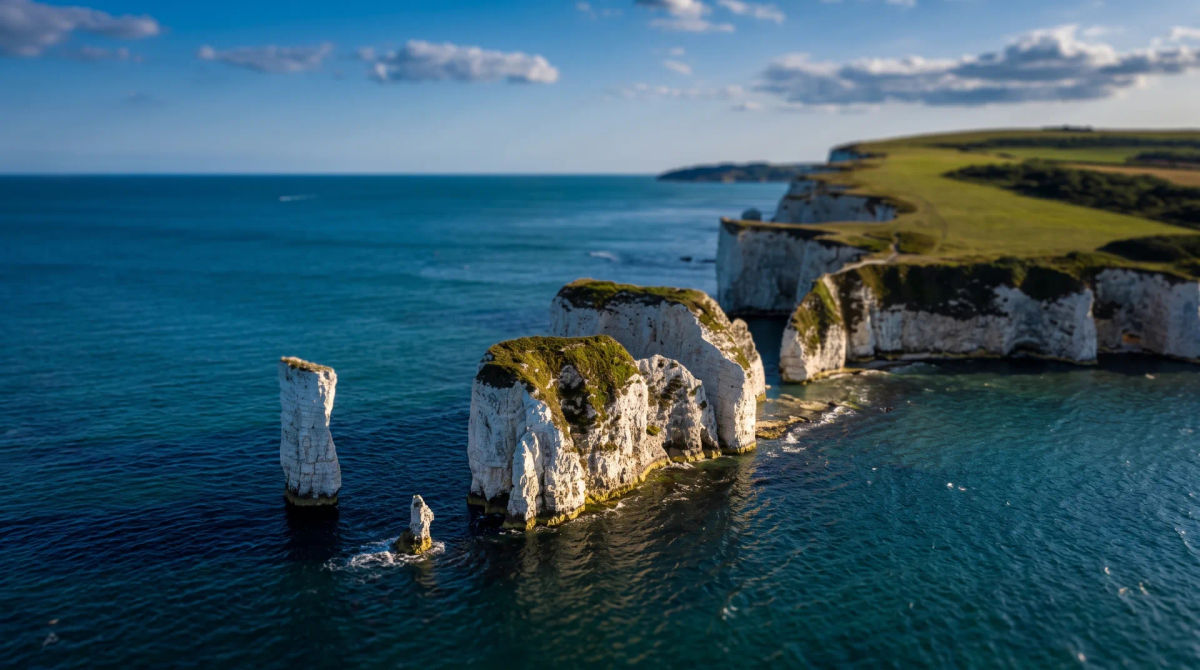
The Purbeck coast is compact, so Durdle Door pairs well with at least one more stop. Corfe Castle is about half an hour east by car, Wareham is on the way, and the chalk stacks of Old Harry Rocks at Studland mark the eastern end of the Jurassic Coast.
Our guide to Old Harry Rocks and Swanage covers the other end of the coast, and towns and cities near Bournemouth includes the market towns within an hour.
Where to stay for a Jurassic Coast trip
Bournemouth works as a base for the Jurassic Coast: the train to Wool leaves from the town's station, and you come back to a choice of restaurants rather than one village pub. Our eight aparthotels are on and around the West Cliff, within walking distance of the town centre and the beach.
The short stays page covers weekend and midweek breaks, and holiday stays lists self-catering apartments for a week. A kitchen means a packed lunch for the coast path, and self check-in means a late drive back is no trouble.
Frequently asked questions
Take a South Western Railway train from Bournemouth to Wool, then the morebus Jurassic Breezer 31, a seasonal bus that runs from Wool station to Durdle Door and Lulworth Cove. In 2026 it ran on weekends and holidays from mid March and daily from 18 May through the summer; out of season, a taxi from Wool is the fallback.
From the clifftop car park it is a steep downhill path to the beach, allow 15 to 20 minutes, and longer coming back up. The walk from Lulworth Cove over the headland is about a mile and climbs steeply before it drops to the arch.
Many people do in summer, but the beach is shingle and shelves steeply, so the water gets deep quickly. We could not confirm regular lifeguard cover, so swim only if you are confident, stay close to shore and keep out of the caves, which the estate warns are subject to cliff falls.