
Sea swimming in Bournemouth in autumn and winter
Sea swimming in Bournemouth through autumn and winter: when the lifeguards stop, cold water shock, tides and forecasts, and which beaches suit a safe dip.

On this page
You can swim in the sea at Bournemouth through autumn and winter, but from October you swim without lifeguards, in water cold enough to cause cold water shock. Go with other people, get in slowly, stay in your depth and keep it short. If anyone gets into trouble, call 999 and ask for the Coastguard.
This guide is safety first. It sets out when the lifeguards leave, what the Royal National Lifeboat Institution (RNLI), the charity that runs the beach lifeguard service here, advises for cold water, how to read the forecast and the tide, and which stretches of Poole Bay suit a winter dip.
When do the lifeguards leave Bournemouth's beaches?
The last RNLI patrols of 2026 end after Sunday 27 September. Until then, lifeguards cover Bournemouth East, Bournemouth West, Boscombe East and Sandbanks daily from 10am to 6pm; the other beaches finished on 6 September. From October to spring, no beach in the bay is lifeguarded.
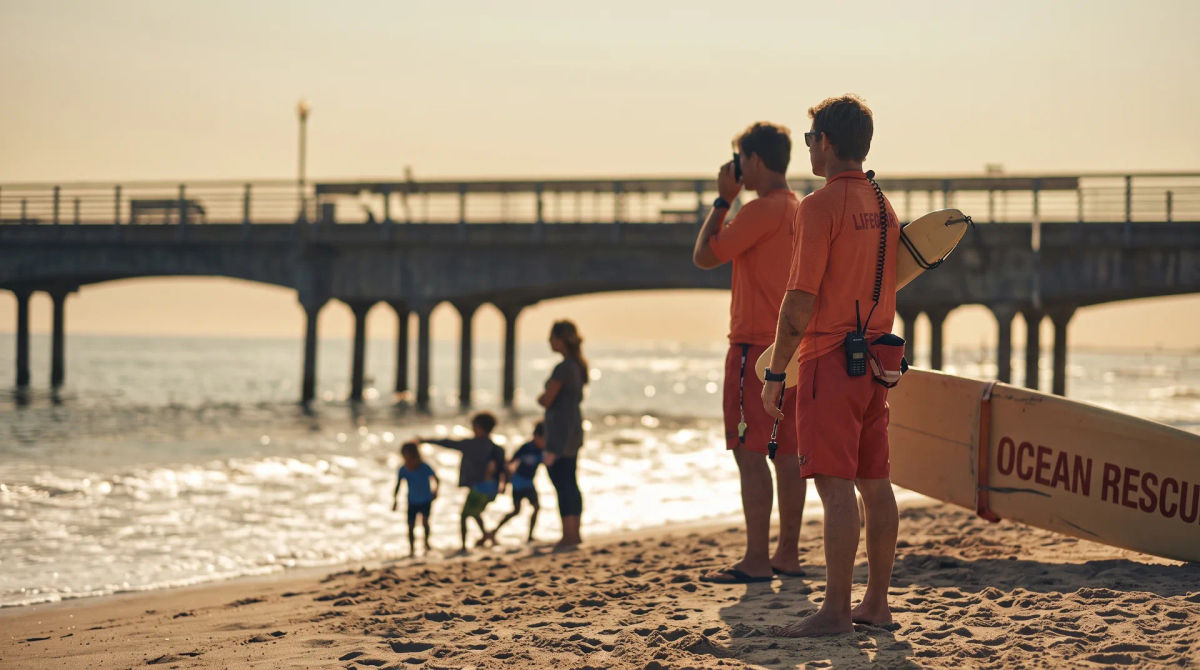
The dates come from BCP Council's lifeguards and beach safety page; BCP Council, the unitary authority for Bournemouth, Christchurch and Poole, funds the RNLI service. In 2026 the main beaches started on 28 March, and next year's dates will be published by the council. The Bournemouth Guide's out-of-season guide makes the same point: no lifeguards between October and Easter.
Without lifeguards there are no red and yellow flags marking a patrolled zone, and nobody watching from the tower. That changes the whole approach: the safety plan is yours.
How cold is the sea in Bournemouth in autumn and winter?
Cold enough to matter. The RNLI defines anything below 15°C as cold water, and the Bournemouth Guide puts the sea at roughly 8 to 9°C in the winter months. In late September and October the sea still holds some summer warmth, but it cools steadily through November into the new year.
Cold water shock is the danger the RNLI warns about most. Entering cold water can make you gasp and lose control of your breathing, and raises your heart rate and blood pressure sharply, which can lead to cardiac arrest. It is why the RNLI says never to jump or dive straight in.
What does the RNLI advise for cold water swimming?
The RNLI's advice for cold water dippers is consistent: prepare, get in slowly, stay close to shore and do not go alone. It also advises a wetsuit, a bright swim cap and a tow float, and knowing in advance how long you plan to stay in. Build up gradually over weeks, not in one brave day.
Its open water swimming advice and seasonal guidance for dippers come down to this:
- Never swim alone. Go with others, or join a group or an organised swim, so you can look out for each other.
- Get in slowly. Walk in, splash your face and neck, and wait until your breathing is under control before you swim.
- Be seen. Wear a bright swim cap and use a tow float.
- Stay in your depth and swim parallel to the shore, not out to sea.
- Take a phone in a waterproof pouch, and warm clothes for before and after.
- Know your limit. Short swims in winter; get out before you feel you have to.
If you get into trouble, the RNLI's Float to Live technique is to fight the instinct to thrash, lean back and float with your head tilted back, moving your hands and legs gently. The first effects of cold water pass in less than a minute; then you can call for help or swim to safety.
How should you check the forecast and the tide?
Check the Met Office beach forecast on the morning of every swim. It gives the wind, the temperature and the tide times for each named beach, and flags rip risk. A calm day with little wind is the easy one; an offshore wind is the day to stay on the sand.
The Met Office forecast for Bournemouth Pier beach takes its tide times from the Bournemouth tidal station, so they are close for the beaches either side. The tide changes how much sand there is between the groynes and how quickly the water deepens, so know whether it is coming in or going out before you walk down.
Offshore winds, blowing from the land out to sea, are the hidden risk: the water looks flat near the shore, but anything floating is carried out. The Bournemouth Guide's Durley Chine listing notes that the chines funnel offshore wind down the valley, which is why inflatables are a bad idea there in any season. Keep away from the piers and the ends of groynes, where the water is less predictable. The Bournemouth Guide's weather page gives a sense of what each month is like.
Which Bournemouth beaches suit a winter swim?
The central and West Cliff beaches suit a winter dip best: they have toilets and showers nearby, a flat promenade, and other people around even in January. None is lifeguarded in winter, so the same rules apply everywhere. Choose a beach with an easy exit and people in sight.
- Durley Chine: a Blue Flag beach about fifteen minutes west of the pier along the promenade, with an eco beach hub at the foot of the chine housing a café, toilets and showers, and a ramp onto the sand.
- Alum Chine: further west, with a gentle shelf that the guide calls the calmest sand in the bay, plus toilets, showers and drinking water at the top of the beach.
- Bournemouth Beach by the pier: the most worked-on stretch of the bay, groyned and replenished, with facilities along the promenade. Swim away from the pier itself.
Boscombe is the bay's watersports beach, busy with boards, so give surfers and paddleboarders plenty of room. Check which cafés and showers are open before you rely on them: the guide notes that seafront kiosks close or drop to weekends out of season.
After the swim
Warm up gradually: dry off, dress in layers, drink something hot and keep moving. The RNLI's advice to bring warm clothes for afterwards is the part people skip.
For a winter swimmer, staying near the sea makes the habit easy. Flexiestays' hotels on and around the West Cliff are a short walk from Durley Chine and the pier, and the Help Centre's guide to what is in your apartment lists a washing machine in its apartments for the wet kit. Our beach safety guide covers the summer rules, Bournemouth's beaches out of season covers what stays open, and every beach near Bournemouth, ranked helps you pick your stretch.
Frequently asked questions
It can be done safely with preparation, but there are no lifeguards between the end of September and spring, and the sea is cold. The Bournemouth Guide puts winter sea temperatures at roughly 8 to 9°C, well below the 15°C the RNLI treats as cold water. Swim with others, stay in your depth and keep swims short.
In 2026, RNLI lifeguards patrol Bournemouth East, Bournemouth West, Boscombe East and Sandbanks daily from 10am to 6pm until Sunday 27 September, according to BCP Council. The other lifeguarded beaches finished on 6 September. There is no lifeguard cover over the winter.
Follow the RNLI's Float to Live advice: fight the urge to thrash, float on your back with your head tilted back, and move your hands and legs gently to stay afloat until the cold shock passes, which the RNLI says takes less than a minute. Then call for help or swim to safety. If you see someone else in trouble, call 999 and ask for the Coastguard.


