
Serviced apartment or a rental in Bournemouth: compared
Monthly serviced apartment or a rental in Bournemouth? An honest comparison of costs, deposits, bills, furnishing and flexibility under the 2026 renting rules.


On this page
A rental usually costs less per month once you are settled; a monthly serviced apartment costs more on the headline figure but includes the bills, the furniture and the flexibility. For a stay of a few months, or while you find your feet, the serviced apartment is often the simpler choice. For a year or more, a rental usually wins.
The rules also changed this year. Since 1 May 2026, new private tenancies in England roll on with no fixed end date, so the familiar six-month let has gone. This guide compares the two options as they stand now, without invented prices: what you pay, what you sign and how easily you can leave.
What changed for renting in England in 2026?
The Renters' Rights Act took effect on 1 May 2026. Most private tenancies are now assured periodic tenancies with no end date, tenants leave by giving two months' notice, landlords can ask for no more than one month's rent in advance, and "no fault" section 21 evictions have ended.
GOV.UK's Renters' Rights Act overview for tenants sets out the detail. The points that matter for someone moving to Bournemouth:
- No fixed term. You cannot sign an assured tenancy with an end date any more. The tenancy rolls on, weekly or monthly.
- Two months' notice to leave. You end the tenancy in writing with two months' notice, unless you and the landlord agree a shorter period in writing.
- One month in advance. After signing, a landlord can ask for a maximum of one month's rent in advance.
- No bidding. Landlords must advertise a rent and cannot accept offers above it.
For a relocation, the change helps. You are no longer locked into six or twelve months. But you still give two months' notice to leave, and the up-front costs and the time it takes to find and set up a rental remain.
What does each option cost up front?
A rental asks for a protected deposit, up to one month's rent in advance and the cost of getting the flat running. A Flexiestays monthly stay asks for the first month in advance and a cleaning and security deposit shown at booking. Neither involves an agency fee.
On a rental, the tenancy deposit is capped at five weeks' rent for most tenancies, and GOV.UK's guide to tenancy deposit protection says the landlord or agent must place it in a government-approved scheme within 30 days. At the end, the landlord must return it within 10 days of you both agreeing how much you get back.
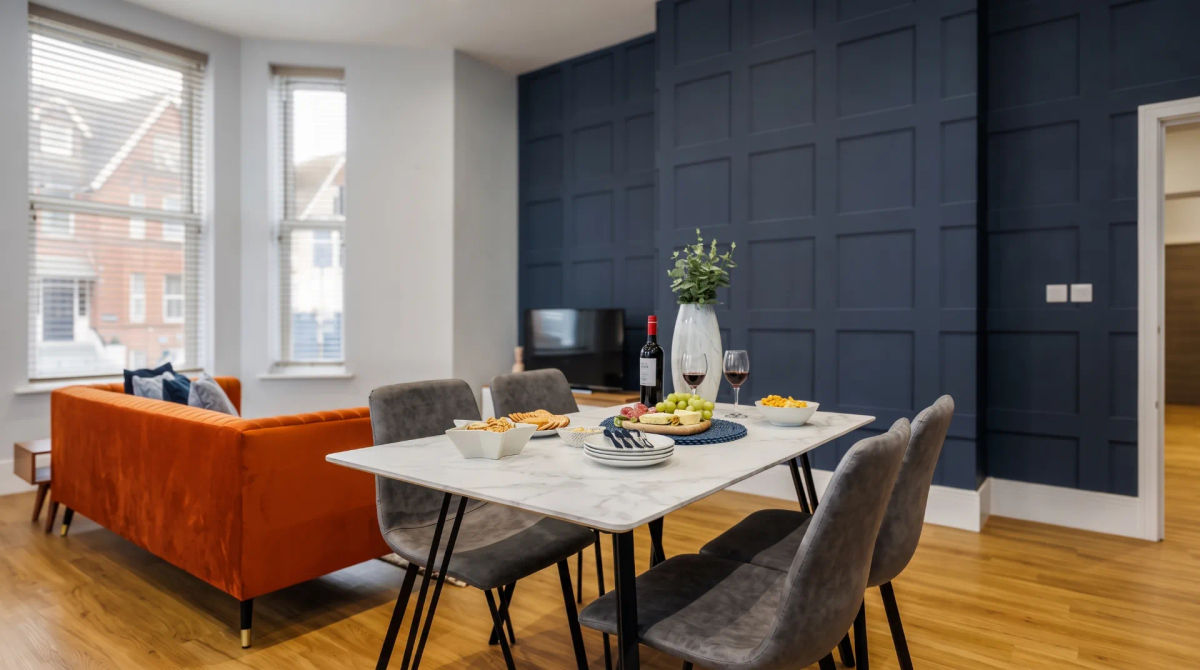
On a serviced apartment, the Help Centre's page on long-stay payments, deposits and invoices explains that monthly stays are billed monthly in advance, with no six-week rental deposit, no guarantor and no agency fee. The cleaning and security deposit is refunded after check-out, less any damage or extra cleaning.
The hidden up-front cost of a rental is the set-up: a bed, a sofa, kitchen things, curtains and the van to move them, plus the days off work to wait for deliveries and the broadband engineer. None of that applies to a furnished serviced apartment.
What does each option cost month to month?
On a rental you pay the rent and then every bill separately: energy, water, broadband, council tax and the TV licence. On a Flexiestays monthly stay, one figure covers electricity, gas, water, fibre wifi, council tax, the TV licence, parking and gym access. Compare the totals, not the headline rents.
The Help Centre lists what is included in the monthly rate, along with the furniture and kitchen equipment. What is not included is your own food, toiletries and anything you add.
Flexiestays' booking site says monthly rates for stays of 28 nights or more are typically 30 to 40 per cent below the nightly rate. Even so, a serviced apartment usually costs more per month than an unfurnished flat's rent alone. The honest test is to add up a rental's rent, bills, council tax, broadband and furniture, spread over the months you expect to stay, and set that against the all-in monthly figure.
| Rental (assured periodic tenancy) | Flexiestays monthly stay | |
|---|---|---|
| Agreement | Tenancy with no end date | Serviced let, not a tenancy |
| Deposit | Protected in a government scheme, capped for most tenancies at five weeks' rent | Cleaning and security deposit, shown at booking |
| Rent in advance | Up to one month after signing | Monthly in advance |
| Bills and council tax | Yours to set up and pay | Included in the monthly rate |
| Furniture | Often unfurnished or part furnished | Fully furnished and equipped |
| Leaving | Two months' notice, unless agreed otherwise in writing | With notice after the first month; the period is in your booking confirmation |
| Time to move in | Viewings, referencing, then the tenancy start date | Book online and move in within days |
How flexible is each option?
A serviced apartment is the more flexible of the two in the first months. There is no commitment beyond the first month, and the stay can be extended or shortened with notice. A rental now has no fixed term either, but leaving takes two months' notice and moving in takes longer.
The Help Centre page on extending or ending a long stay early sets out how it works. To extend, tell the team before your current month ends; to leave early, give notice in writing, and the final invoice is adjusted to your last night. The notice period is stated in your booking confirmation.
That flexibility is why serviced apartments suit gaps: a relocation before you know the town, a house purchase waiting on a chain, a contract that might end early. Our guide to being between homes in Bournemouth covers those cases.
Which option suits which situation?
Use a serviced apartment when you need to move in quickly, stay for weeks or a few months, or do not yet know where you will settle. Choose a rental when you know the neighbourhood, expect to stay a year or more and want your own furniture around you.
- New job, new town. A monthly stay first, then a rental once you have walked the areas. Our first month checklist sets out the order, and relocating to Bournemouth for work covers the employers.
- Contract of three to twelve months. Usually a serviced apartment, especially if an employer is paying: the contractor accommodation page covers VAT invoices and monthly billing.
- Settling for years. A rental, or buying. The Bournemouth Guide's neighbourhood guide is a good start on where.
What should you ask before signing either?
Ask the same questions of both: what is included, how much is due before you move in, how the deposit is returned and how much notice you must give. Get the answers in writing, and compare the total cost over the months you expect to stay.
For a rental, check the deposit scheme and the notice period in the tenancy. For a serviced apartment, read the booking confirmation and the Help Centre pages above. The Bournemouth Guide's long stays guide covers daily life on a longer stay, and our comparison of aparthotels and hotels helps if you are also weighing a hotel. For monthly apartments with live availability, see the long-term stays page.
Frequently asked questions
Not a fixed-term one. GOV.UK says that since 1 May 2026 most private tenancies in England are assured periodic tenancies, which roll on with no end date. A tenant ends one by giving two months' notice in writing, unless tenant and landlord agree a shorter period in writing.
Usually not on the headline monthly figure, but the gap narrows once you add bills, council tax, broadband, furniture and the time it takes to set a flat up. For a stay of a few months, or when you need to move in within days, a serviced apartment often works out simpler and sometimes cheaper overall.
Flexiestays takes a cleaning and security deposit rather than a rental deposit. The amount is shown at booking and refunded after check-out, less any damage or extra cleaning. There is no guarantor and no agency fee.
GOV.UK's deposit protection rules are written for assured tenancies. Flexiestays describes its monthly stays as a serviced let rather than a tenancy, and its Help Centre says the deposit is shown at booking and refunded after check-out, less any damage or extra cleaning. If you are unsure what applies to any agreement, ask before you sign.


