Things to Do in Bournemouth: The Complete Local Guide
A local's guide to things to do in Bournemouth across every season, from the pier and seafront to Hengistbury Head, day trips, and rainy-day options.

On this page
Bournemouth gets undersold. People expect a tired seaside town and find a coast with seven miles of sand, two piers, three connected Victorian gardens, a working symphony orchestra, an iron-age archaeological site within walking distance of the centre, and some of the strongest natural day-trip routes in southern England. This guide is the editorial briefing we hand to anyone planning a first trip, with honest framing on what is worth your time and what is not.
The town divides into clear orbits of activity. The seafront is the obvious first day. The cultural offer is smaller than London or Bristol but punches above its size for a town of 200,000 people. The walking and the outdoors are the underrated half. And the day-trip radius reaches some of the most photographed coastline in the country.
The seafront, your first day
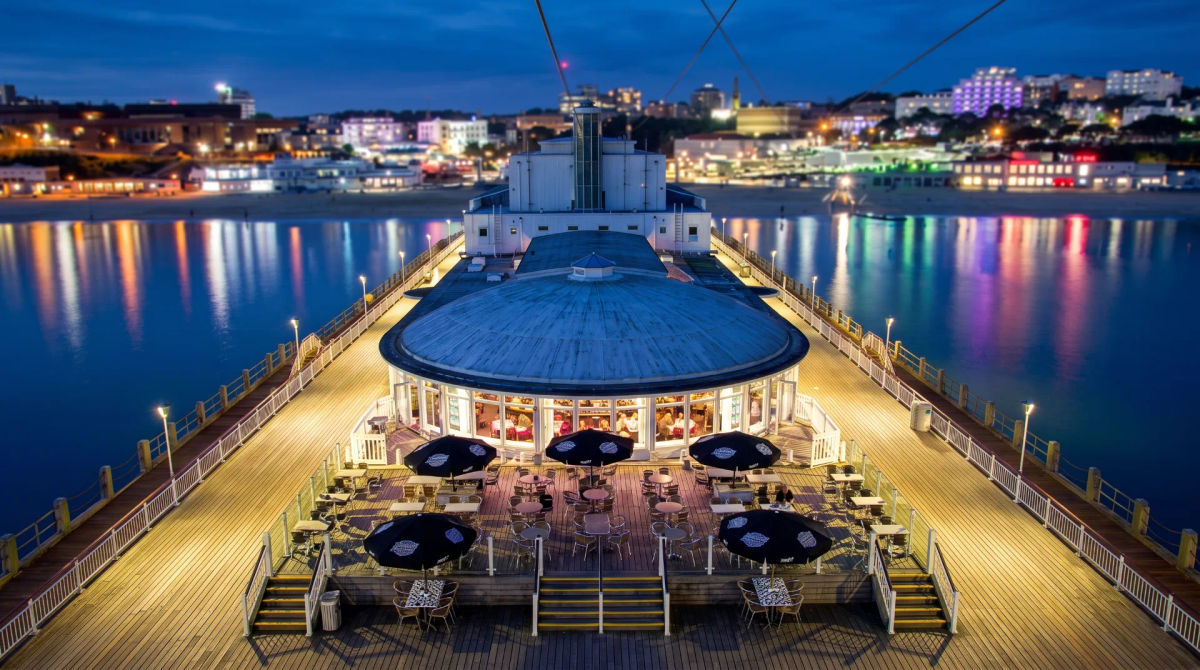
Start at Bournemouth Pier. It opened in 1880, the latest of several iterations after earlier piers were damaged by storms, and it remains the geographic centre of the visitor experience. The walk down to the pier head takes about four minutes and gives you the framing for everything else: the seven-mile sand line running east to Boscombe and Hengistbury Head, west to Branksome and Sandbanks, the cliffs rising behind, and the pier itself busy in summer with anglers, families, and the occasional event.
From the pier, the seafront promenade stretches in both directions. Walking east, you reach Boscombe Pier in about 35 minutes, passing the Bournemouth Oceanarium, the Lower Gardens entrance, and the beach hut rows that line the upper promenade. Walking west, you reach Alum Chine in about 25 minutes, with West Cliff towering above and the formal cliff-top walks running parallel to the promenade. The whole stretch is flat, paved, and well-lit. The seasonal land train runs between the two piers in summer for visitors who would rather sit than walk.
The first time I came to Bournemouth I thought I would see the pier and be ready to leave. By Sunday I had walked to Hengistbury Head and back and was already planning to bring my mother.
Mia Reynolds, returning visitor, March 2026
Behind the pier, the Lower Gardens open up into the town centre. This is the first of three formal Victorian gardens connected by paths along the Bourne stream: Lower (closest to the sea), Central (middle, with the war memorial), and Upper (the largest and quietest, north of the town centre). The gardens are free, lit at night in summer, and host the Bournemouth Air Festival fly-pasts and the Christmas market in season. They are also the easiest way to walk from the pier to Westover Road without crossing the main traffic gyratory.
For first-time visitors looking for a structured base, our neighbourhoods guide goes through the seven main districts and who each suits. West Cliff and the Town Centre are the two strongest first-trip options.
Museums, galleries, and culture
Bournemouth's cultural offer concentrates in three places.
Russell-Cotes Art Gallery and Museum sits at the top of East Cliff in the Victorian house Merton and Annie Russell-Cotes built for themselves at the turn of the twentieth century. They collected obsessively across Europe, Asia, and the Pacific, and the result is a strange and excellent house museum: stained glass, theatrical wall coverings, and a small but unusual collection that includes works by Rossetti, Burne-Jones, and Edwin Long. The garden gives one of the best views of the bay. Plan an hour to two hours for a visit.
The Bournemouth Symphony Orchestra is one of Britain's longest-running professional orchestras, founded in 1893. It performs across Dorset and Hampshire from its base in Poole, including regular concerts at the Lighthouse in Poole and seasonal programmes at the Bournemouth Pavilion. Tickets are reliably available and prices are usually below comparable London concerts.
Theatres include the Pavilion Theatre (the larger venue, hosting touring productions), the Bournemouth International Centre (the BIC, which doubles as a conference and concert venue, hosting larger acts), and the small but well-regarded Tivoli Theatre in Wimborne (a 20-minute drive north). The University of Bournemouth's Pier Approach is also worth a check for student-run productions and visual art shows.
The town's heritage sites cluster east of the centre. St Peter's Church in the Town Centre is the resting place of Mary Shelley, author of Frankenstein, and her parents Mary Wollstonecraft and William Godwin. The headstones are clearly marked and the church is open most days.
Walks and the outdoors
This is the underrated half of Bournemouth.
The cliff-top walks above West Cliff and East Cliff run for about three miles each way along the South West Coast Path, with regular descent points down the wooded ravines (chines) to the beach. The cliffs are about 35 metres above sea level at the highest point, the views are unobstructed across Poole Bay, and the paths are tarmacked enough for prams and most accessibility needs.
The chines themselves are worth a separate visit. Durley Chine, Middle Chine, and Alum Chine on the west, Boscombe Chine on the east, all run from the cliff-top down through woodland to the beach. Alum Chine in particular has a small tropical garden and a working trout stream. The chines were the original Victorian routes from the cliff hotels down to bathing machines on the sand; they remain the prettiest way to access the beach on foot.
Hengistbury Head is the major outdoor draw. A scheduled monument and nature reserve at the eastern edge of Bournemouth, the headland combines an Iron Age settlement, a salt marsh, the Christchurch Harbour entrance, and views from Double Dykes to the Isle of Wight on clear days. The walk from the visitor centre to the end of the headland and back is about three miles, with optional spurs around Mudeford Spit. Allow half a day, take a flask, and check the tide table if you want to walk the southern spit.
For cyclists, the Bournemouth seafront cycle path (shared use along the promenade in winter, restricted in summer) is the most popular route. The longer routes head east into Christchurch and the New Forest, or west into Poole and around the harbour.
With kids
The beach is the obvious answer and stays correct for most ages. Beyond that:
- The Bournemouth Oceanarium, on the seafront just east of the pier, is small but well-curated. Two to three hours holds most children under 12.
- Wonderland at the seafront amusement zone runs the rides and the funfair. Less polished than the larger UK theme parks; works well for an afternoon, less so for a full day.
- The Lower Gardens splash pad and play area is free, supervised in summer, and one of the best urban play spaces on the South Coast.
- Boscombe and Branksome beach huts rent by the day or week. The huts are basic (no plumbing, electric on a coin meter at some sites) but the experience of having a base on the sand is what makes a family day work.
- Bodyboarding and surf lessons at Boscombe in summer, run by the Bournemouth Surfing Centre and others. The artificial reef offshore has had a complicated history; the wave it produces is inconsistent.
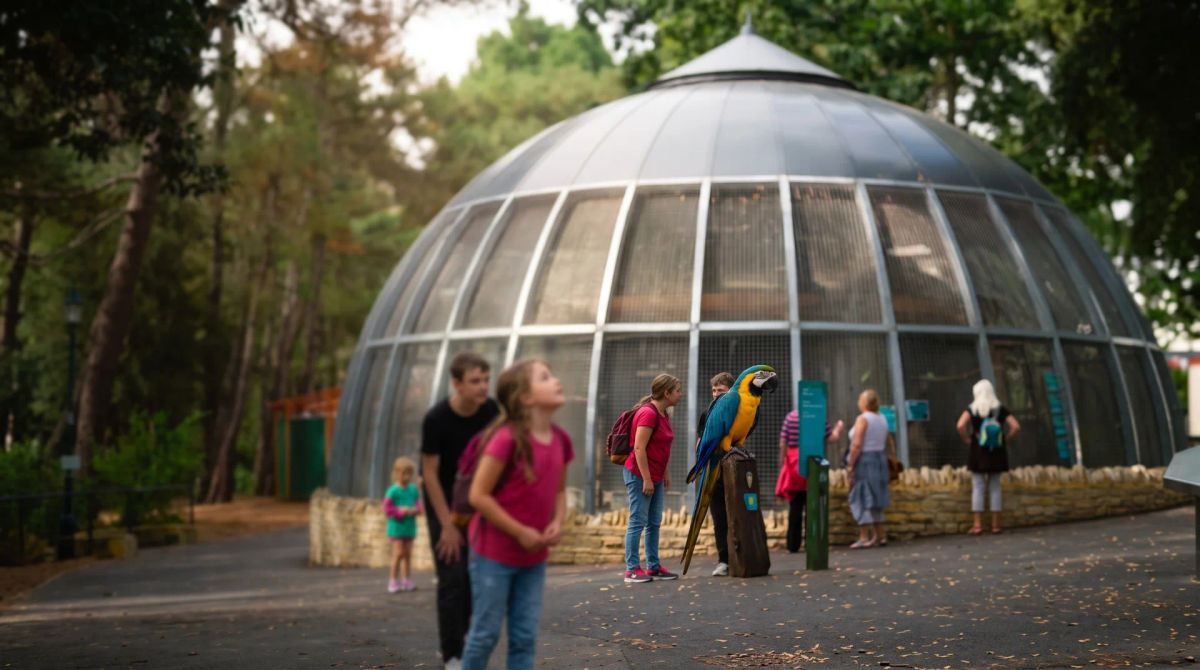
- The Bournemouth Land Train runs the seafront in summer. It is slow but children love it and it gets you between the two piers without the walk back.
For families staying longer than a long weekend, the New Forest National Park is a 25-minute drive north and adds horse riding, cycling, and forest walks to the mix.
Day trips from Bournemouth
The 60-minute radius around Bournemouth is one of the strongest day-trip catchments in southern England.
Old Harry Rocks is the postcard destination. The chalk stacks at the eastern end of the Jurassic Coast are reached by parking at Studland or walking from Swanage along the cliff-top. From Bournemouth, the simplest route is the Sandbanks Chain Ferry across the harbour mouth, then a 25-minute walk through Studland Heath. Allow half a day end to end. The walk is moderate; the views from the cliff edge are some of the best in southern England.
Corfe Castle is a 35-minute drive west, the ruined Norman castle dominating the village below. The National Trust runs the castle and the walking is straightforward. Combine with a steam-train return on the Swanage Railway if your timing aligns.
Poole Quay and Brownsea Island form a natural pair. Poole Quay has a working harbour, a clutch of restaurants, and the ferry pier for Brownsea Island, a small wooded island in the harbour where red squirrels still live. The island is National Trust and the ferry runs roughly hourly in summer.
The New Forest is a 25-minute drive north. Lyndhurst is the obvious first stop, with the New Forest Museum and the start of several short walks. Beaulieu adds a motor museum if that interests anyone in the group. The forest itself is best in autumn for the colour and in spring for the foals.
Christchurch and Mudeford Spit sit between Bournemouth and the New Forest. The Priory Church is one of the longest parish churches in England. Mudeford is the small fishing village and the spit at the end is reached by a ferry from Mudeford Quay or a 25-minute walk along the harbour. The Beach Hut Café on the spit is one of the better seafood lunches in the area.
Lulworth Cove and Durdle Door are the farthest of the regular day trips, about 50 minutes by car. The cove itself is the geological draw, the path to Durdle Door is steep but short, and the whole site can get extremely crowded in peak summer. Aim for early morning or late afternoon.
Seasonal highlights
Summer (June to August): the beach, the seafront events, the Air Festival in late August (one of the largest free air shows in the UK), the Bournemouth Open tennis tournament, the outdoor cinema in the Lower Gardens.
Autumn (September to November): emptier beaches, dog-friendly access across the full seven miles, the New Forest in colour, the Bournemouth Christmas market starting in mid-November.
Winter (December to February): the Christmas market in the Lower Gardens, the BIC's pantomime and theatre season, dramatic cliff walks with the sea at its most photogenic, the Bournemouth Symphony Orchestra winter programme.
Spring (March to May): the Bournemouth Gardens at their best, the south coast cycle routes opening up, the Hengistbury Head birdlife in nesting season, the lighter evenings making cliff-top walking properly enjoyable again.
At night
Bournemouth has a real but uneven nightlife. The bar streets concentrate around the Triangle, Old Christchurch Road, and the eastern end of Westover Road, and they get busy on Friday and Saturday from about 22:00. For something quieter, the West Cliff seafront restaurants serve later than you might expect, and the BIC and Pavilion theatre programmes provide a structured evening option. The cliff-top promenades are well-lit and broadly safe well into late evening; the Lower Gardens are reliably busy in summer.
If you are travelling with older children or want a less student-heavy scene, Westbourne and Boscombe have stronger independent food and drink. The Boscombe food scene piece covers that in more depth.
Free things to do
The structural answer is that Bournemouth's biggest assets are free. The beach, the seafront, the three gardens, the cliff-top walks, Hengistbury Head, the Air Festival, the Christmas market on entry, the chines, and the Russell-Cotes garden are all without charge. Within the museums, the Russell-Cotes house has an entry fee but the formal garden is free to visit. The Bournemouth Open and several of the Lower Gardens summer events are free at the point of attendance.
For visitors on a budget, a three-day stay that uses the beach as the daytime anchor, the gardens as the evening anchor, and one paid attraction (say Russell-Cotes or the Oceanarium) costs less than a day in central London.
With dogs
Dog access on the central beach is restricted in summer (typically May to September). Outside those months, the entire seven miles is dog-friendly, including the promenade. The Branksome and Sandbanks beaches have year-round dog zones, and Hengistbury Head allows dogs throughout the reserve subject to ground-nesting bird seasons. The cliff-top walks are dog-friendly year-round. Most of the chines and the gardens allow dogs on lead. For a fuller list, the Bournemouth, Christchurch and Poole council page is the authoritative source.
Where to start
For a first visit, the simplest plan is to spend the morning on the pier and the Lower Gardens, walk to Boscombe in the afternoon, and pick one of the day trips for the second day. If you have three days, add Hengistbury Head as a third-day full outdoor and a Westbourne evening as the slow paced restaurant night.
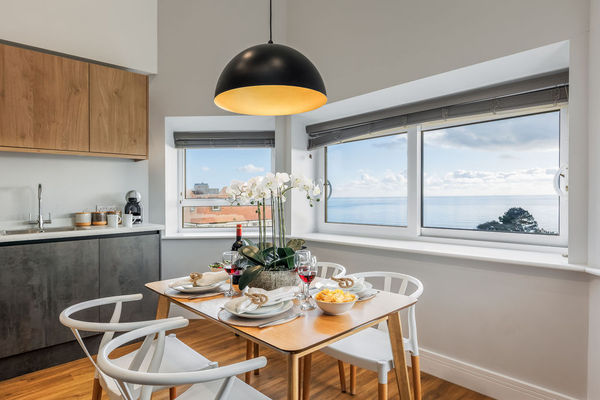
Whichever shape your trip takes, book direct with Flexiestays for around 15% less than the major booking platforms charge. We operate 89 apartments across 8 buildings in Bournemouth, most within a 12-minute walk of the pier and the seafront.
Frequently asked questions
Russell-Cotes Art Gallery and Museum on East Cliff is the strongest indoor option, with a Victorian house to explore and a small but well-edited art collection. The Bournemouth Oceanarium on the seafront keeps children busy for two to three hours, and the BIC, Pavilion Theatre, and Tivoli Theatre all run year-round programmes. Westover Road has the main shopping arcade, and most of Westbourne and Boscombe's cafés are within a short walk of seafront shelter.
For younger children, head for the Oceanarium, the Lower Gardens for the play area and the splash pad, Wonderland at the seafront, and the beach huts at Boscombe or Branksome. For older children, the artificial surf reef and bodyboarding hire at Boscombe Pier are popular, as are the cycle paths along Hengistbury Head and the seasonal land train along the promenade. The Lower Gardens host free outdoor events throughout the summer.
The Triangle, Old Christchurch Road, and Westover Road concentrate the late-night bar and restaurant scene. The BIC and Pavilion Theatre run music and theatre programmes year-round. For a quieter evening, the Bournemouth Symphony Orchestra performs regularly at the Lighthouse in Poole and the Pavilion, and the cliff-top walks above West Cliff and East Cliff are well lit and broadly safe well into the late evening.
The beach, the seafront promenade, the three connected gardens (Lower, Central, Upper), and the cliff-top walks are all free. So is Hengistbury Head and its archaeology trail, the South West Coast Path along the chines, the Russell-Cotes garden (entry to the museum is paid), and the Bournemouth Air Festival in late August. Many of the town's biggest events are deliberately free at the point of attendance.
The most popular day trips are Sandbanks and the chain ferry to Studland (then Old Harry Rocks and the Purbeck coast), Corfe Castle, Poole Quay and Brownsea Island, Christchurch and Mudeford Spit, the New Forest National Park, and Lulworth Cove on the Jurassic Coast. Most are within an hour by car or by direct bus from Bournemouth Square.
Yes. A weekend in Bournemouth comfortably covers the pier, the seafront, two or three meals, one museum, and one day trip. Pick West Cliff or the Town Centre as a base for easy walking access, then plan one outdoor day, one rainy-day backup, and an evening meal in Westbourne or the Triangle. The town is compact enough that you do not need a car if you stay central.