
Where to Stay in Bournemouth: Neighbourhoods Compared
A local guide to the seven neighbourhoods that define Bournemouth, with the pros, trade-offs, and who each one suits, from a decade hosting here.

On this page
Picking the right neighbourhood in Bournemouth changes the entire feel of a trip. The town is small enough that nowhere is truly far from the pier, but each district has a distinct character, a different demographic, and a different reason to stay there. This guide walks through the seven neighbourhoods most visitors choose between, with honest trade-offs from a decade of living and hosting here.
We have run Flexiestays apartments in Bournemouth since 2018, currently operating 89 apartments across 8 buildings, so the angles you read here come from real guest feedback rather than tourism brochures. Where we are biased, we say so. Where the bus runs late or the parking is bad, we say so. This is the briefing we wish every first-time visitor had.
The lay of the land
Bournemouth sits on the South Coast of England in the county of Dorset, halfway between Southampton and Weymouth. The seafront runs roughly east to west for seven miles, all of it golden sand, much of it Blue Flag-awarded. Behind the beach, the land rises in a series of cliffs cut through by wooded ravines called chines, which give several of the neighbourhoods their character.
From west to east along the coast, the main districts are Westbourne, West Cliff, Town Centre, East Cliff, Boscombe, and Southbourne. North of the centre sit residential and commercial areas like Winton, Charminster, and Springbourne, useful for long stays and budget options but rarely the choice for short holidays. To the west, just over the Poole border, Sandbanks and Branksome are technically in a different town but close enough that visitors often consider them.
The whole stretch is walkable. From Westbourne in the west to Southbourne in the east is about an hour on foot along the promenade, or 25 to 35 minutes by car depending on the time of day. Local buses are frequent and the Beach Buses run beach-front routes through the summer.
Town Centre
The Town Centre is the safest choice for a first visit. Pier, Lower Gardens, Square, BIC, the Pavilion, and the main shopping streets sit within a quarter-mile of each other, so the area earns its reputation as a self-contained holiday base.
The plus side is convenience. You can roll out of bed and be on the beach in 8 minutes. The Square is the bus hub, so day trips to Sandbanks, Christchurch, or the New Forest are direct. Restaurants cluster on Westover Road, around the Triangle, and along Old Christchurch Road, with the standard mix of mid-range chains and a handful of standouts.
The trade-offs are noise and density. Friday and Saturday nights are loud around the bars from roughly 22:00. The seafront thins out in winter and some of the Pier-adjacent businesses close from late October to Easter. Parking is paid and limited. If you are arriving by car, factor in a daily parking budget unless your accommodation includes a space.
Best for: first-time visitors, anyone arriving by train, short weekend breaks, conference and BIC visitors.
Look for: aparthotels and serviced apartments on the streets between the Square and the BIC, particularly along Bourne Avenue and Exeter Road.
West Cliff
West Cliff runs along the cliff-top west of the Town Centre, from the BIC roughly to Durley Chine. It was Victorian Bournemouth's hotel district and the legacy is everywhere: large detached buildings with sea views, broad tree-lined roads, the West Cliff Promenade running along the top of the cliff. Several of the town's traditional grand hotels still operate here.
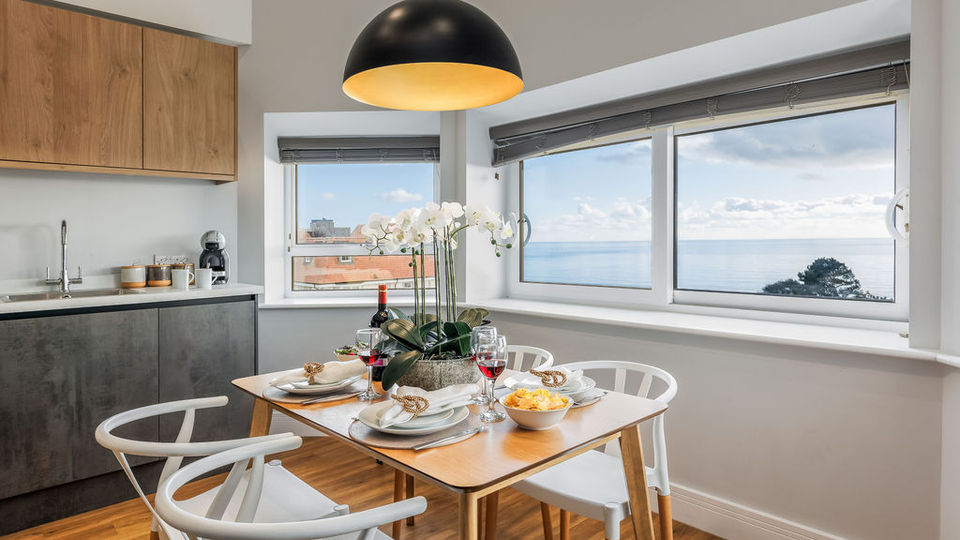
What you get for choosing West Cliff is sea breeze, sea view, and a quieter base than the centre. The walk into the Square is about 8 to 12 minutes, the West Cliff Lift carries you down to the beach in about 90 seconds when running, and Durley Chine is one of the most pleasant routes from cliff to sand. Restaurants are thinner on the ground than in the centre, which can be a feature or a bug depending on your plans.
The trade-offs are price and traffic noise from the West Cliff Road, which can be busy in peak season. If your room faces the road rather than the sea, the upside of the area drops sharply.
Best for: travellers who value sea view over walking distance to nightlife, return visitors, couples on a slower-paced trip.
Look for: hotels and aparthotels along West Cliff Road and Priory Road. Sea-facing rooms command a premium.
East Cliff
East Cliff mirrors West Cliff to the east of the pier. It is similarly residential, similarly leafy, with the East Cliff Lift connecting clifftop to the beach. Architecture is mixed Victorian and 1960s, with several modernist apartment buildings overlooking the sea.

East Cliff in winter is the version of Bournemouth most visitors miss. The promenade is empty, the wind off the Channel is real, and the cafés in Boscombe Pier are quietly excellent.
A returning guest, three nights in February
East Cliff is the slightly more peaceful of the two cliff neighbourhoods, partly because it is further from the BIC's main event traffic. The walk into the centre is about 10 to 15 minutes, slightly longer than from West Cliff because Old Christchurch Road takes you through the East Overcliff Drive first. Russell-Cotes Art Gallery and Museum is on East Cliff, and we cover the visit in our Russell-Cotes visitor guide.
The trade-off compared to West Cliff is the slightly weaker stock of large hotels. East Cliff leans more residential, more serviced apartment, fewer four-star hotels. For families and longer stays this is an advantage.
Best for: couples, repeat visitors, families wanting to stay near the centre without the noise, museum lovers.
Look for: serviced apartments along Manor Road and Gervis Road, particularly in the older converted Victorian buildings.
Westbourne
Westbourne is the "village" of Bournemouth. The high street, Seamoor Road, runs north from the cliff-top and concentrates a strong cluster of independent shops, cafés, and bistros within four blocks. It is the area where locals from across Bournemouth come to do their weekend shopping, which gives it a different energy from the visitor-oriented Town Centre.
The seafront end of Westbourne meets the cliff at Alum Chine, one of the prettiest of the wooded ravines and the access route from cliff to the western beaches. The walk to Bournemouth Town Centre takes about 18 minutes along the cliff-top or 25 by road. The drive to Sandbanks is closer and faster than from the centre.
For accommodation, Westbourne is dense with serviced apartments and a small number of boutique hotels. The trade-off is that you are further from the pier; the upside is that you have a much better neighbourhood food and shopping experience and quieter evenings.
Best for: foodies, design-conscious travellers, couples staying four nights or more, long-stay guests.
Look for: aparthotels on Poole Road and the side streets above Alum Chine.
Boscombe
Boscombe is the most interesting story in Bournemouth right now. A decade ago the seafront area was tired; today it has built a reputation for independent coffee, surf, vintage, and a slightly bohemian creative scene. Boscombe Pier sits at the centre, with the artificial surf reef offshore (though the reef has had a complicated history; its consistency is debated locally and we cover the current state in our Boscombe surf guide).
Boscombe Beach is generally less crowded than the central beaches, the Boscombe Chine Gardens are excellent for families, and Christchurch Road through Boscombe has the densest cluster of independent food and drink east of the Triangle. The downside is that the area is still in transition. Some streets a few blocks back from the seafront are run-down, the late-night scene around Christchurch Road can be louder than visitors expect, and the high street has more vacant units than Westbourne.
Best for: families with older children, surfers, anyone who prefers a creative seafront to a polished one, longer stays where you want to live like a local.
Look for: serviced apartments on the Boscombe Cliff side of the area, particularly the converted buildings along Sea Road and Boscombe Spa Road.
Southbourne
Southbourne is the family neighbourhood. Further east still, more residential, with the Southbourne Coast Road running parallel to the cliff-top and the beach quieter and shelvier than in the centre. The high street, Southbourne Grove, has a long-established café and shop scene that is more functional and less hipster than Westbourne or Boscombe.
The pier is 20 minutes by car or 35 by bus, so day trips into the centre are realistic but not casual. What you get in exchange is the calmest of Bournemouth's beach neighbourhoods, easier parking, and a strong feeling that you are in a small seaside town rather than a holiday resort. Hengistbury Head sits at the eastern edge of Southbourne; the Hengistbury Head walking guide is the place to start if that is one of your reasons for visiting.
Best for: families with young children, dog owners, longer stays, anyone who prioritises beach over town.
Look for: ground-floor apartments and small cottages around Southbourne Grove and the streets between Tuckton and the cliff.
Sandbanks and Branksome (technically Poole)
Sandbanks deserves a mention even though it is across the Poole border. The peninsula projecting into Poole Harbour has the highest property prices in the country outside London, sand beaches considered among the best in the UK, and direct ferry access to Studland Bay. From Sandbanks, the walk to Old Harry Rocks across Studland Heath is one of the great day-trip options.
For accommodation, Sandbanks is a different price tier. A few hotels and serviced apartments operate, most aimed at higher-end leisure travellers and short corporate stays. From Sandbanks into Bournemouth Town Centre is a 20-minute drive in normal traffic, much longer on summer Saturdays.
Branksome Chine, just to the east of Sandbanks, is a useful middle ground. The cliff-top and the Branksome Beach are quieter than central Bournemouth and the drive into the centre is about 12 minutes.
Best for: high-end leisure, sailing visitors, day-trippers to Studland and the Purbeck coast, anyone primarily there for the beach.
Look for: the small number of beachfront and clifftop apartments. Availability is thin and pricing is the highest in the area.
How to choose, in one sentence each
If you are visiting for the first time, pick the Town Centre for convenience or West Cliff for sea view and walkability.
If you want a slower pace, pick East Cliff or Westbourne depending on whether you prioritise walking distance to the pier or to independent shops.
If you are travelling with kids, pick Southbourne for the calm beach or East Cliff for proximity to museums and the centre.
If you want creative, surfy, independent energy, pick Boscombe.
If you are coming for the harbour, the sailing, or Old Harry Rocks, pick Sandbanks or Branksome.
For longer stays of two weeks or more, Westbourne, Southbourne, and East Cliff are the strongest fits. They feel like neighbourhoods, not holiday districts, and you will live more comfortably for a fraction of the central rate.
Whichever neighbourhood you choose, book direct with Flexiestays for around 15% less than the major booking platforms charge. We operate apartments in several of these districts; the team can suggest the right building once you know which neighbourhood fits your trip.
Frequently asked questions
For a first visit, base yourself in the Town Centre or on West Cliff. Both are within a 10-minute walk of the pier, the Lower Gardens, and the main restaurant and bar streets. West Cliff has the sea views and the older Victorian hotel buildings, while the centre puts you closest to the Square, Westover Road shopping, and the BIC. Pick West Cliff for a quieter base with sea breeze, the centre if you plan to use buses and trains daily.
Southbourne is the strongest family choice. The beach is calmer than the centre, the parking is easier, the streets are residential, and the high street is short and walkable. East Cliff is the second pick if you want to stay closer to the town centre but still away from the late-night crowds. Boscombe works for older children and teenagers who want to be near the surf reef and the eclectic Boscombe high street.
Sandbanks is in Poole, not Bournemouth. It is about 5 miles west of Bournemouth pier and takes 20 to 30 minutes by car depending on traffic. The Sandbanks chain ferry connects to Studland and the Purbeck coast, useful if you plan to walk on Old Harry Rocks. A bus runs from Bournemouth Square to Sandbanks but takes about 50 minutes.
Bournemouth Town Centre is broadly safe, with the usual Friday and Saturday late-night crowd around the bars on Old Christchurch Road and the Triangle. The Square and the seafront are well-lit and CCTV-covered. If you want a quieter base, pick West Cliff, East Cliff, or Westbourne; all three are within 10 to 15 minutes of the centre but separate from the late-night drinking scene.
Westbourne and Boscombe both have strong independent food scenes. Westbourne is the quieter, more polished version, with cafés, delis, and bistros along Poole Road. Boscombe is rougher around the edges but has built a reputation for independent coffee, plant-based food, and craft beer in the past five years. The Town Centre concentrates the bigger restaurant brands and a few standout independents.
For stays longer than two weeks, Westbourne and Southbourne are the best fit. Both feel like proper neighbourhoods rather than holiday districts, with supermarkets, GPs, post offices, and quieter streets. Long-stay apartments in either area let you settle into a routine without paying centre-of-town prices. East Cliff is a third option, particularly if you need to commute into the centre by foot.


